How to Prepare a Business Plan for a Bank Loan
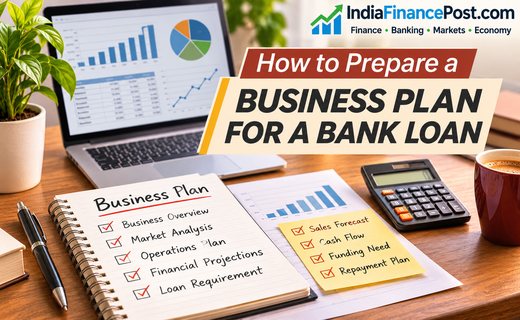
How to Prepare a Business Plan for a Bank Loan
How to Prepare a Business Plan for a Bank Loan is an essential skill for Indian entrepreneurs seeking finance to launch, operate or expand a business.
A strong business plan explains what your enterprise does, how much money it needs and how it expects to repay the borrowing. Banks examine business viability, financial performance and repayment capacity before sanctioning loans.
Here is a practical approach to preparing a bank-ready proposal.
Why Banks Ask for a Business Plan
A business plan helps lenders evaluate whether your funding requirement is reasonable and your repayment assumptions are realistic.
According to the Ministry of MSME’s Know Your Lender guide, banks assess factors including profitability, existing liabilities, cash flow, management capability and credit history.
For certain government-supported loans, such as PMEGP, a Detailed Project Report (DPR) is specifically required.
How to Prepare a Business Plan for a Bank Loan: Step-by-Step
Step 1: Write an Executive Summary
Begin with a brief overview covering your business name, location, activities, customers and funding requirement.
Explain how the proposed loan will help the enterprise and identify its expected repayment source.
Keep the summary clear enough for a lender to understand the proposal quickly.
Step 2: Describe Your Business
Include the business structure, ownership, operating history and relevant registrations.
Explain your products or services, production capacity, suppliers and competitive advantages.
Existing businesses should mention important achievements and operational challenges. New businesses should explain their launch plan.
Step 3: Analyse Customers and Competition
Identify your target customers, expected demand, pricing strategy and major competitors.
Support important assumptions with available evidence, such as customer enquiries, confirmed orders, market research or past sales.
Avoid unsupported claims that your business has no competition.
Step 4: Calculate the Funding Requirement
Separate fixed investment from working-capital needs.
Fixed investment may include machinery, equipment and shop improvements. Working capital covers recurring requirements such as inventory, wages and operating expenses.
Show how much you will contribute and how much you expect to borrow.
Step 5: Prepare Financial Projections
Estimate monthly sales, direct costs, operating expenses and cash flow.
Provide assumptions behind your projections rather than presenting figures without explanation.
For an existing business, reconcile forecasts with previous financial statements and bank records.
Step 6: Explain Repayment Capacity
Show how operating cash flow can support the proposed loan instalments.
Include existing debt repayments, seasonal fluctuations and a reasonable allowance for unexpected expenses.
Banks may also evaluate debt-service coverage and other financial ratios.
Step 7: Add Risks and Supporting Documents
Identify risks such as weak demand, supplier disruption, rising costs or delayed customer payments.
Explain how you intend to manage them.
Attach relevant quotations, licences, registrations, financial statements and other documents requested by the lender.
Sample Business Plan Financial Summary
Consider an illustrative small manufacturing business seeking financing for equipment and working capital.
| Particulars | Illustrative amount |
|---|---|
| Machinery and equipment | ₹4,00,000 |
| Initial working capital | ₹2,00,000 |
| Total project cost | ₹6,00,000 |
| Owner’s contribution | ₹1,50,000 |
| Proposed bank loan | ₹4,50,000 |
Assume projected monthly sales of ₹2,00,000, direct costs of ₹1,10,000 and operating expenses of ₹50,000.
That leaves an estimated ₹40,000 monthly operating surplus before interest, tax, depreciation and other adjustments.
This is not automatically the amount available for loan repayment. Actual cash collections, taxes, reinvestment and existing commitments must also be considered.
All figures are illustrative, not promised business results.
Documents to Attach to Your Business Plan
Depending on the lender, supporting documents may include PAN, Udyam registration, applicable GST records, bank statements, income-tax returns, financial statements and equipment quotations.
The lender may require additional documents based on the loan product and business structure.
Common Business Plan Mistakes
Avoid unrealistic sales growth, missing working-capital estimates and inconsistent financial figures.
Do not present loan proceeds as business revenue or confuse accounting profit with available cash.
Keep projections conservative and explain their underlying assumptions.
For additional financing context, review the official PMEGP project-report guidance.
Conclusion
Learning How to Prepare a Business Plan for a Bank Loan helps entrepreneurs present a structured, credible financing proposal.
A useful plan combines a clear business description, realistic market assessment, accurate funding calculations and evidence of repayment capacity.
A well-prepared plan can support a lender’s assessment, but it does not guarantee loan approval.
Disclaimer: This article is for educational purposes only. Loan requirements and approval decisions vary by lender. Seek professional financial or accounting advice where necessary.