RBI November 2026 Household Surveys: Key Details
RBI Launches November 2026 Household Surveys
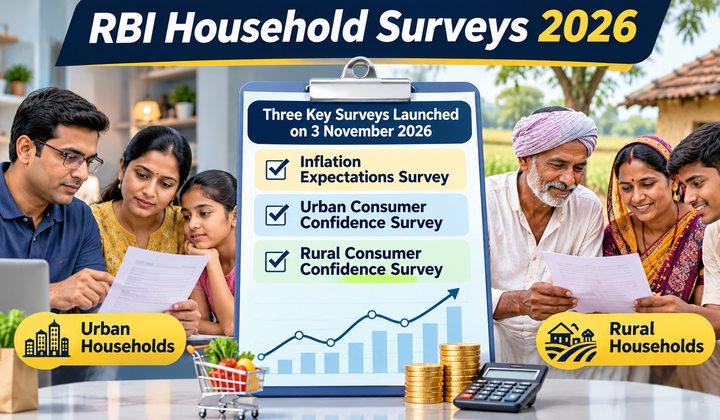
The RBI November 2026 household surveys have been launched to collect people’s views on prices, household finances and economic conditions. On November 3, 2026, the Reserve Bank of India announced fresh rounds of three surveys covering inflation expectations and consumer confidence in urban and rural India.
These surveys help the central bank understand how households experience the economy. They are not announcements of new interest rates, inflation figures or financial benefits.
What Are the RBI November 2026 Household Surveys?
The RBI has launched the November rounds of three separate exercises:
- Inflation Expectations Survey of Households
- Urban Consumer Confidence Survey
- Rural Consumer Confidence Survey
Each survey examines a different aspect of household experience.
The inflation survey focuses on how people perceive price changes and what they expect in the future. The consumer confidence surveys examine households’ assessments of economic conditions and their expectations for the months ahead.
The November 3 announcements mark the beginning of the survey rounds, not the publication of their findings.
Inflation Expectations Survey: Why It Matters
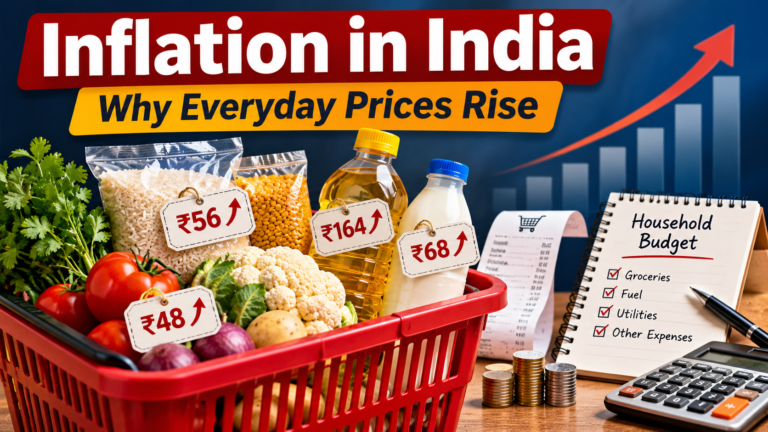
Inflation affects how much families can buy with their income. Even when official inflation declines, households may continue to feel pressure from essential expenses.
The Inflation Expectations Survey of Households gathers views on current price movements and expected inflation.
Such information can help the RBI assess whether people expect prices to rise faster or more slowly.
This matters because expectations can influence spending, saving and wage negotiations. They can also provide useful context for monetary policy discussions.
However, household expectations are not the same as the official Consumer Price Index (CPI). Survey responses reflect what participants think or experience, while CPI inflation is calculated using a statistical methodology.
Urban Consumer Confidence Survey
The Urban Consumer Confidence Survey examines how households in cities assess their financial and economic situation.
Consumer confidence can be influenced by employment opportunities, income growth, inflation and major household expenses.
For example, a family expecting stronger income growth may feel more comfortable making a large purchase. A household concerned about rising costs may choose to save more or postpone spending.
By collecting such views, the RBI gains additional information about consumer sentiment.
The survey does not guarantee that spending or economic growth will move in the same direction as respondents’ expectations.
Rural Consumer Confidence Survey
The Rural Consumer Confidence Survey focuses on households outside urban centres.
Rural families may face different economic conditions, including variations in agricultural income, local employment and seasonal spending.
A separate rural survey allows the RBI to study these experiences without relying only on responses from cities.
This distinction is important in India, where household income sources and consumption patterns differ considerably across regions.
Together, the urban and rural surveys can offer a broader view of how consumers assess the economy.
Will These Surveys Affect RBI Interest Rates?
The surveys can contribute to the information available to policymakers, but they do not automatically trigger a repo-rate change.
The RBI considers multiple indicators when evaluating monetary policy, including inflation, economic activity and financial conditions.
Survey findings can provide context about consumer expectations, but they are only one part of that assessment.
Borrowers should therefore not assume that a new survey announcement means home-loan or personal-loan interest rates will immediately change.
Similarly, depositors should not treat the announcement as a signal that fixed-deposit rates are about to rise or fall.
What Do the Surveys Mean for Ordinary Households?
The immediate effect on most households is limited.
There is no new tax, payment requirement or banking rule arising simply from the launch of these survey rounds.
Their value lies in helping the RBI understand financial pressures and consumer sentiment.
For readers, the eventual results may offer insight into whether households feel more optimistic about jobs, income and spending, or remain concerned about inflation.
Those findings will need to be assessed alongside official economic data.
How to Avoid Survey-Related Scams
Anyone approached for an official financial survey should verify the identity of the organisation or representative involved.
Do not share banking passwords, UPI PINs or OTPs with someone claiming to collect economic information.
A household survey is not a reason to transfer money or provide access to a bank account.
For official announcements and publications, use the Reserve Bank of India website.
Frequently Asked Questions
Has the RBI released the November 2026 survey results?
No. The November 3 announcements concern the launch of the survey rounds, not their final findings.
Do these surveys change the repo rate?
No. The launch itself does not change the repo rate. Monetary policy decisions follow a separate process.
Why are urban and rural households surveyed separately?
Separate surveys help capture differences in employment, income, spending and economic conditions across household groups.
Conclusion
The RBI November 2026 household surveys are a fresh effort to understand inflation expectations and consumer confidence across India.
Their importance will become clearer when the RBI publishes the findings. Until then, the announcements should be understood as data-collection initiatives rather than new policy decisions.
Disclaimer: This article is for general financial information and does not constitute investment or borrowing advice.