
Inflation in India: Causes, Effects and Solutions
Inflation in India: Causes, Effects and Solutions
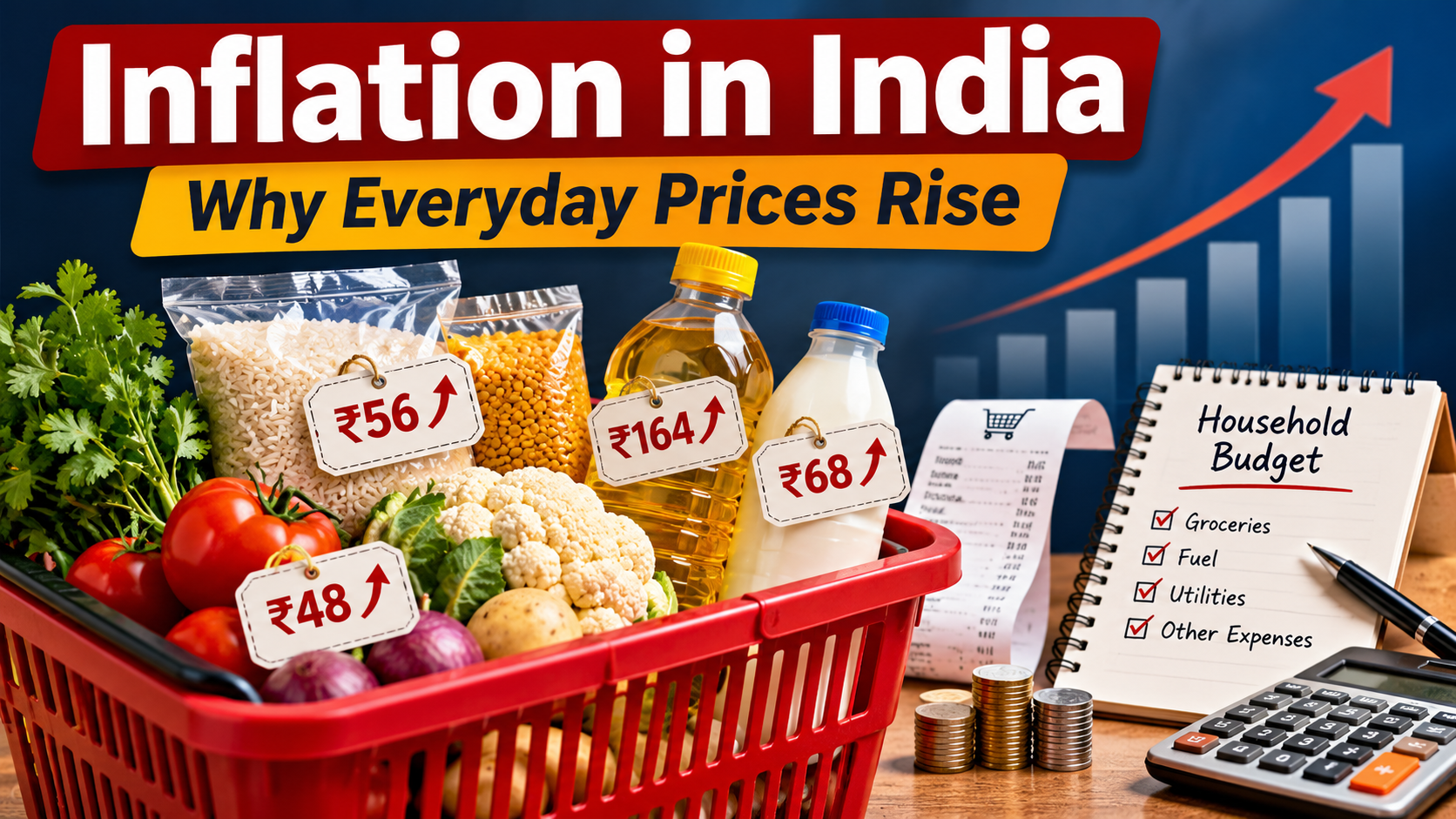
Inflation in India affects almost every household, from grocery bills and transport costs to savings and long-term financial planning. When the prices of everyday goods and services increase, families may need to spend more money to maintain the same standard of living.
Understanding inflation helps consumers make informed financial decisions and better understand the role of the Reserve Bank of India (RBI) in managing price stability.
What Is Inflation in India?
Inflation refers to a sustained increase in the general price level of goods and services over time.
For example, if a basket of essential household items costs ₹5,000 today and its price rises by 5%, the same basket would cost ₹5,250, assuming its composition remains unchanged.
This means the purchasing power of money has declined.
Inflation does not necessarily mean that every product becomes more expensive. Some prices may increase while others remain unchanged or decline.
How Is Inflation Measured in India?
India primarily uses the Consumer Price Index (CPI) to measure retail inflation.
CPI tracks changes in the prices of a representative basket of goods and services consumed by households.
These include food, housing-related expenses, clothing, transportation and other everyday necessities.
India also publishes the Wholesale Price Index (WPI), which measures price movements for a different basket of goods at the wholesale level.
CPI and WPI serve different purposes and may show different inflation trends.
What Causes Inflation in India?
Several domestic and international factors influence inflation.
1. Rising Food Prices
Food prices can increase because of poor harvests, unusual weather, supply shortages, transportation disruptions or changing demand.
Since food is a significant part of household expenditure, higher prices can put considerable pressure on family budgets.
2. Higher Fuel and Energy Costs
India imports a substantial portion of its crude oil requirements.
When international crude oil prices rise, transportation and production costs may increase, potentially affecting the prices of other goods and services.
3. Supply Chain Disruptions
Disruptions in transportation, manufacturing, storage or distribution can reduce the availability of products.
If supply becomes limited while demand remains strong, prices may rise.
4. Strong Consumer Demand
When consumer spending grows faster than the economy’s ability to produce goods and services, businesses may raise prices.
This is commonly known as demand-pull inflation.
5. Currency Exchange Rate Changes
A weaker Indian rupee can make imported goods and raw materials more expensive in rupee terms.
This may contribute to higher domestic prices, depending on global prices and how much of the increase businesses pass on to consumers.
How Does Inflation Affect Indian Households?
Household Budgets
Higher grocery, electricity, transport and education costs can reduce the amount of money available for discretionary spending.
Families may need to adjust their budgets or postpone certain purchases.
Savings and Purchasing Power
Inflation reduces the purchasing power of money over time.
For example, if your savings earn 4% annually while inflation is 6%, their purchasing power declines by approximately 1.9% over the year, before considering taxes.
This illustrates why the real return on savings matters.
Fixed Deposits
Bank fixed deposits offer interest income based on their terms.
However, if inflation exceeds the after-tax interest earned, the real purchasing power of the deposit may decline.
Consumers should compare returns, taxation, liquidity and safety rather than looking only at advertised interest rates.
Loans and EMIs
Inflation can influence RBI monetary policy and market interest rates.
If borrowing rates increase, some floating-rate loans may become more expensive, depending on their terms and reset schedules.
Fixed-rate loans may behave differently.
How Does the RBI Control Inflation?
The Reserve Bank of India uses monetary policy tools to influence borrowing costs, liquidity and demand.
One important instrument is the repo rate, which is the rate at which the RBI lends to eligible banks against specified securities under its liquidity operations.
When inflationary pressure is high, tighter monetary policy may help moderate demand.
When economic activity weakens and inflation conditions permit, easier monetary policy may support borrowing and spending.
However, interest-rate changes cannot directly resolve every cause of inflation, particularly disruptions involving food production or global energy supplies.
What Can the Government Do to Manage Inflation?
Government measures may include improving food supply chains, strengthening storage infrastructure, reducing logistical bottlenecks and taking targeted action on supply shortages.
Fiscal decisions, import and export policies, and infrastructure investment can also influence inflation.
The effectiveness of these measures depends on the cause of the price increase and prevailing economic conditions.
How Can You Protect Your Finances From Inflation?
Although individuals cannot control inflation, they can take practical steps to manage its impact.
Review your household budget. Track essential expenses and identify avoidable spending.
Maintain an emergency fund. Keep accessible savings for unexpected expenses rather than depending entirely on credit.
Compare savings options. Consider interest rates, taxation, safety and liquidity.
Plan long-term investments carefully. Investment products may offer growth potential, but returns are not guaranteed and risks vary.
Review financial goals periodically. Account for rising costs when planning education, retirement or major purchases.
Inflation vs Deflation: What Is the Difference?
Inflation means the general price level is rising.
Deflation means the general price level is falling.
A decline in the inflation rate does not necessarily mean prices are falling. It usually means prices are increasing more slowly.
For example, inflation declining from 6% to 4% generally indicates slower price growth, not a 2% reduction in prices.
This distinction is important when interpreting economic news.
Frequently Asked Questions
What is the main cause of inflation in India?
There is no single cause. Food prices, fuel costs, consumer demand, supply disruptions and international economic conditions can all contribute.
Is inflation always bad?
Low and predictable inflation can coexist with economic growth. High or unpredictable inflation can make household budgeting and business planning more difficult.
Does inflation reduce the value of savings?
Inflation reduces purchasing power. Whether savings maintain their real value depends on their after-tax returns relative to inflation.
Can the RBI completely eliminate inflation?
The RBI can influence inflation through monetary policy, but it cannot directly control every supply-related or international price shock.
Does lower inflation mean groceries become cheaper?
Not necessarily. Lower positive inflation generally means prices are increasing more slowly.
Final Thoughts
Inflation in India is an important economic indicator because it affects household budgets, borrowing costs, savings and financial planning.
Understanding the causes of inflation, monitoring economic developments and maintaining a balanced financial plan can help households respond more effectively to rising living costs.
For official inflation statistics, readers can consult the Ministry of Statistics and Programme Implementation (MoSPI): https://www.mospi.gov.in/
For monetary policy information, visit the Reserve Bank of India: https://www.rbi.org.in/
Disclaimer: This article is for general educational and informational purposes only. It does not constitute personalized financial or investment advice.