
How Much Emergency Fund Do You Need in India?
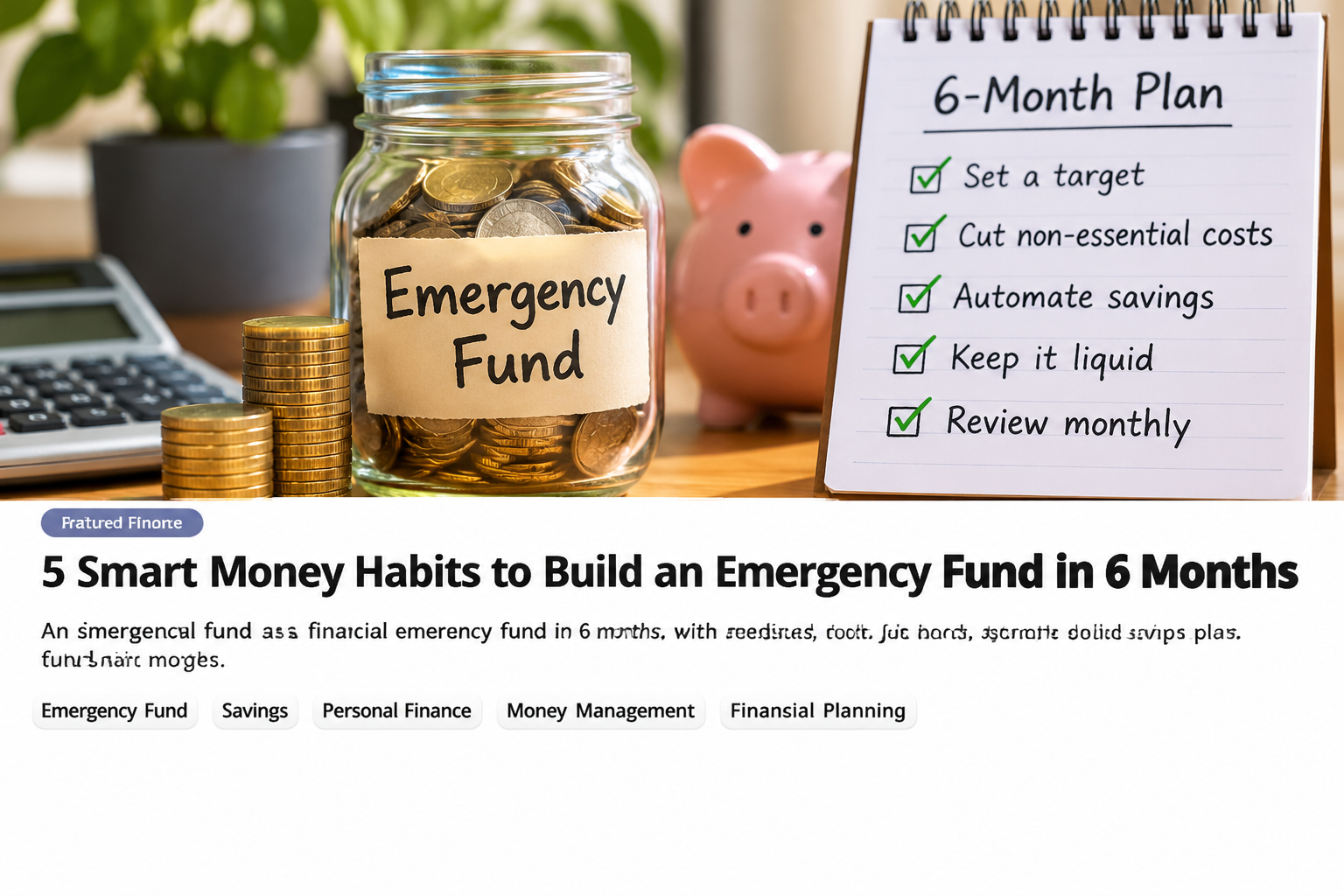
How Much Emergency Fund Do You Need in India?
An unexpected medical expense, job loss, urgent home repair or sudden family emergency can create serious financial pressure. Having an emergency fund in India helps you manage these situations without immediately relying on loans or credit cards.
But how much should you save? Is ₹50,000 enough, or should you aim for ₹3 lakh or more?
The answer depends on your essential monthly expenses, job stability, family responsibilities and existing financial commitments.
What Is an Emergency Fund?
An emergency fund is money kept separately to cover unexpected and necessary expenses.
Unlike savings intended for holidays, shopping or investments, emergency savings should remain safe and easily accessible.
You may need this money for:
- Unexpected job loss or salary interruption
- Emergency medical expenses
- Essential home or vehicle repairs
- Urgent family expenses
- Temporary business income loss
The purpose is financial protection, not maximum investment returns.
How Much Emergency Fund Should You Have?
A common starting recommendation is to save three to six months of essential living expenses.
If you have irregular income, dependants or significant financial obligations, you may prefer six to twelve months.
| Monthly Essential Expenses | 3-Month Fund | 6-Month Fund |
|---|---|---|
| ₹15,000 | ₹45,000 | ₹90,000 |
| ₹20,000 | ₹60,000 | ₹1,20,000 |
| ₹25,000 | ₹75,000 | ₹1,50,000 |
| ₹30,000 | ₹90,000 | ₹1,80,000 |
| ₹40,000 | ₹1,20,000 | ₹2,40,000 |
| ₹50,000 | ₹1,50,000 | ₹3,00,000 |
These amounts are illustrative. Your personal target may be higher or lower.
How to Calculate Your Emergency Fund
First, calculate your essential monthly spending.
Include house rent, groceries, electricity, water, essential transportation, insurance premiums, necessary school expenses and required loan repayments.
Exclude discretionary expenses such as holidays, entertainment and unnecessary shopping.
Example:
If your essential monthly expenses are ₹25,000:
- Three-month emergency fund: ₹75,000
- Six-month emergency fund: ₹1,50,000
- Twelve-month emergency fund: ₹3,00,000
Someone with stable employment and fewer dependants may start with a smaller reserve. A self-employed person with irregular earnings may benefit from a larger one.
Where Should You Keep Your Emergency Fund?
1. Savings Bank Account
A savings account is suitable for money you might need immediately.
You can generally access funds through UPI, ATM withdrawals, net banking or branch services, subject to banking restrictions.
2. Fixed Deposit
A bank fixed deposit may offer higher interest than an ordinary savings account.
However, premature withdrawal can involve penalties, and some deposit products have withdrawal restrictions.
For emergency purposes, choose deposits that permit early withdrawal.
3. Liquid Mutual Funds
Liquid mutual funds invest primarily in short-term debt and money-market instruments.
They may be considered for a portion of your emergency savings, but they carry investment risks and redemption is not always immediate.
Unlike eligible bank deposits, mutual funds do not receive DICGC deposit insurance.
Are Emergency Savings Safe in Indian Banks?
The Deposit Insurance and Credit Guarantee Corporation (DICGC) provides insurance for eligible bank deposits up to ₹5 lakh per depositor per insured bank, including principal and interest, subject to applicable rules.
Eligible balances in multiple accounts held in the same capacity at one insured bank are generally combined for this limit.
This protection does not extend to mutual funds, shares or other market-linked investments.
How to Build an Emergency Fund Step by Step
You do not need to accumulate the entire amount immediately.
Step 1: Calculate your essential monthly expenses.
Step 2: Set an achievable emergency savings target.
Step 3: Keep emergency money separate from everyday spending.
Step 4: Automate a monthly savings contribution.
Step 5: Increase your contribution when your income grows.
Step 6: Replenish your emergency fund after withdrawing money.
For example, saving ₹5,000 monthly builds ₹60,000 over one year, excluding interest.
Even small contributions can create meaningful financial protection over time.
Emergency Fund vs Investments
Emergency savings and investments serve different purposes.
An emergency fund prioritizes safety, accessibility and financial stability.
Investments generally focus on long-term financial goals and potential returns.
Stocks and equity mutual funds may fall sharply in value during a market downturn. Depending on them for emergency expenses could force you to sell at a loss.
That is why it is sensible to maintain accessible emergency savings alongside your investment portfolio.
When Should You Use Your Emergency Fund?
Use your emergency savings for genuine, necessary and unexpected expenses.
Examples include emergency hospital bills, sudden unemployment or essential repairs.
Avoid using this fund for planned shopping, vacations, luxury purchases or other non-essential expenses.
After using the money, prioritize rebuilding the fund.
Frequently Asked Questions
Is ₹1 lakh enough for an emergency fund?
It depends on your expenses. If you spend ₹20,000 monthly on essentials, ₹1 lakh could cover approximately five months.
Can I keep my emergency fund in a fixed deposit?
Yes, provided the deposit allows premature withdrawal and you understand the applicable penalties.
Should I invest emergency savings in stocks?
Stocks are generally unsuitable for money that may be needed urgently because market prices can fluctuate significantly.
Is a credit card an alternative to an emergency fund?
A credit card can provide temporary access to credit, but interest and repayment obligations make it an unreliable replacement for emergency savings.
How often should I review my emergency fund?
Review your target at least once a year and whenever your income, expenses or family responsibilities change.
Final Thoughts
Building an emergency fund in India is an important part of personal financial planning.
For many households, three to six months of essential expenses is a practical starting point. People with uncertain income or greater responsibilities may need more.
Start small, save consistently, keep your money accessible and review your target regularly.
Disclaimer: This article is for general educational purposes and does not constitute personalized financial advice. Verify current banking terms, deposit insurance eligibility and product risks before making financial decisions.