Indian Railways Freight Loading Jumps 8.32% in October
Indian Railways Freight Loading Jumps 8.32% in October
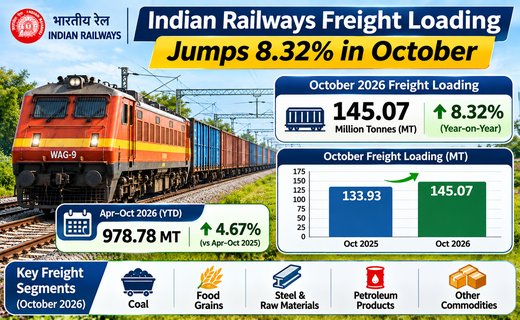
Indian Railways Freight Loading increased by 8.32% year-on-year in October 2026, reaching 145.07 million tonnes (MT), according to figures released by the Ministry of Railways on 4 November 2026.
The October performance was the highest freight loading recorded by Indian Railways for that month. It highlights increased movement of goods across the country’s railway network, including commodities important to power generation, manufacturing and agriculture.
The figures also provide a useful indicator of logistics activity, although freight growth alone does not establish the pace of overall economic growth.
Indian Railways Freight Loading: October 2026 Highlights
According to the Ministry of Railways’ official announcement, freight loading rose from approximately 133.93 MT in October 2025 to 145.07 MT in October 2026.
| Indicator | Reported performance |
|---|---|
| October 2026 freight loading | 145.07 MT |
| October 2025 freight loading | Approximately 133.93 MT |
| Year-on-year October growth | 8.32% |
| April–October 2026 loading | 978.78 MT |
| April–October year-on-year growth | 4.67% |
The increase represents approximately 11.14 MT of additional freight compared with the same month last year.
The latest data covers goods loaded for transportation, not passenger traffic or the total value of goods transported.
Freight Growth During April–October 2026
The positive performance extended beyond a single month.
During April–October 2026, Indian Railways reported cumulative freight loading of 978.78 MT, representing 4.67% growth compared with the corresponding period of the previous financial year.
This seven-month performance is relevant because it offers a broader view of railway freight activity during FY 2026–27.
However, year-on-year comparisons can also be affected by changes in commodity demand, weather conditions, industrial production and the timing of shipments.
Why Railway Freight Matters for India’s Economy
Railways transport large quantities of essential commodities over long distances.
Coal movement supports electricity generation and industrial operations, while transportation of steel, cement and raw materials connects factories with suppliers and customers.
Food grain transportation is important for agricultural supply chains and distribution.
Higher freight loading may therefore reflect stronger transportation requirements across several sectors.
For businesses, efficient rail freight services can help move bulk materials at scale and reduce dependence on road transport for suitable routes.
Nevertheless, an increase in tonnes transported should not automatically be interpreted as higher corporate profits or stronger demand in every industry.
Which Sectors Could Benefit?
Power and energy: Coal transportation remains important for thermal power stations, making railway capacity and reliability relevant to electricity supply.
Steel and manufacturing: Movement of iron ore, finished steel and other industrial materials helps connect production facilities with domestic markets.
Agriculture and food distribution: Rail freight supports the movement of food grains and other agricultural commodities across regions.
Logistics and infrastructure: Higher goods movement may support demand for railway wagons, terminals, handling equipment and related logistics services.
The actual financial benefits for individual companies depend on freight rates, operating costs, shipment volumes and contractual arrangements.
What Does the Increase Mean for Consumers?
The October freight figures do not directly imply that household prices will fall.
However, reliable movement of bulk commodities can support supply chains and reduce transportation bottlenecks.
Over time, improvements in logistics efficiency may benefit businesses and consumers, depending on how savings are distributed.
For investors, freight statistics are useful economic indicators but should be considered alongside industrial production, electricity demand, company earnings and broader economic data.
Frequently Asked Questions
How much freight did Indian Railways load in October 2026?
Indian Railways reported freight loading of 145.07 million tonnes in October 2026.
What was the annual growth rate?
Freight loading increased by 8.32% compared with October 2025.
Does higher railway freight loading mean India’s GDP grew by 8.32%?
No. The 8.32% figure measures the growth in railway freight loading for October, not India’s GDP growth rate.
Conclusion
The latest Indian Railways Freight Loading figures show a strong October 2026 performance, with 145.07 MT transported and 8.32% year-on-year growth.
Cumulative loading of 978.78 MT during April–October also points to continued activity across India’s rail-based supply chains.
The figures are encouraging for the logistics sector, but their wider economic significance should be assessed alongside other official indicators.
Disclaimer: This article is for general information only and does not constitute investment advice.