India October Inflation 2026 Hits 6.09%
India October Inflation 2026 Hits 6.09% as Food Prices Rise
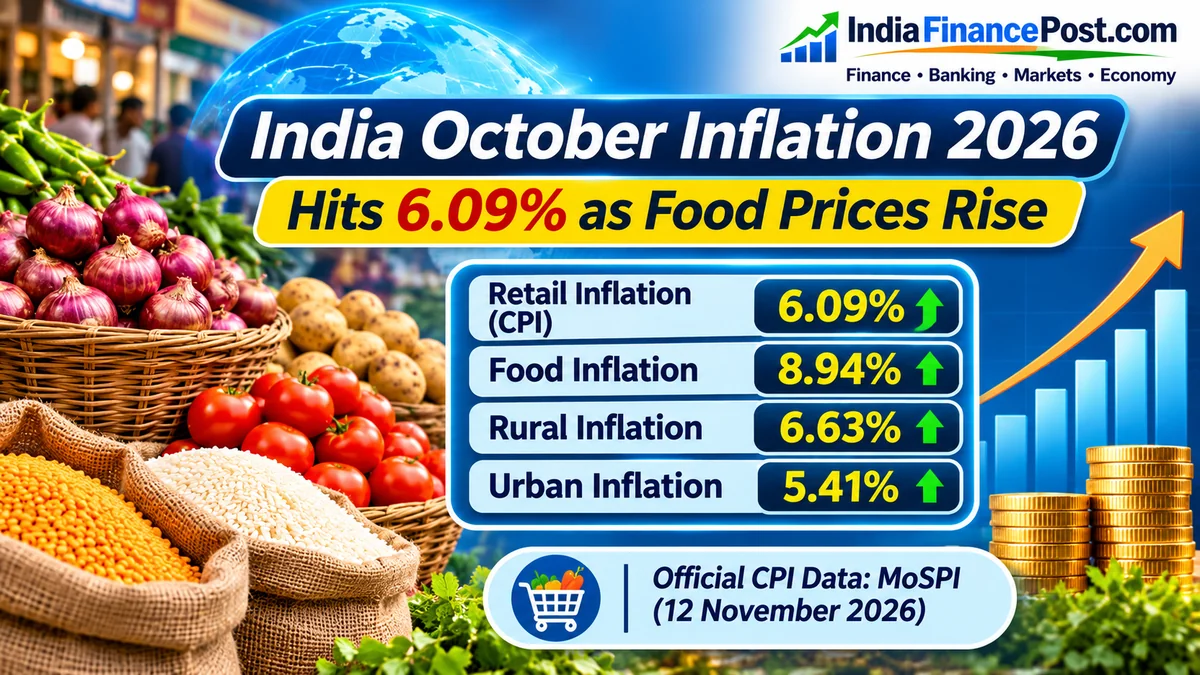
India October Inflation 2026 increased to 6.09% in October, compared with 5.54% in September, according to official data released by the Ministry of Statistics and Programme Implementation (MoSPI) on November 12, 2026.
Food inflation climbed to 8.94%, increasing pressure on household budgets. The latest Consumer Price Index (CPI) reading also crossed the Reserve Bank of India’s upper inflation tolerance limit of 6%, drawing attention to future monetary policy decisions.
India October Inflation 2026: Key Figures
The National Statistics Office (NSO) released the provisional October inflation figures using the CPI series with base year 2024.
| Inflation Indicator | September 2026 | October 2026 |
|---|---|---|
| Retail inflation | 5.54% | 6.09% |
| Food inflation | 7.74% | 8.94% |
| Rural inflation | 6.08% | 6.63% |
| Urban inflation | 4.88% | 5.41% |
Source: MoSPI official CPI release.
Headline inflation increased by 0.55 percentage points, while food inflation rose by 1.20 percentage points. These changes compare annual inflation rates, not month-on-month price increases.
Why Are Food Prices Rising?
Food inflation remained a major contributor to the overall increase in consumer prices.
The official data showed particularly sharp annual price increases for onions, garlic, ginger and lemons. Onion inflation reached 116.22%, while garlic inflation stood at 60.74%.
However, not all vegetables became more expensive. Potato prices declined 14.24% year-on-year, demonstrating how inflation can differ significantly between individual products.
Higher grocery expenses can affect families disproportionately because essential food purchases cannot easily be postponed.
Rural Inflation Higher Than Urban Inflation
Rural retail inflation reached 6.63%, compared with 5.41% in urban areas.
Rural food inflation stood at 9.09%, while urban food inflation was 8.68%.
Different consumption patterns and local price movements can contribute to these differences.
For rural households, higher essential expenses may reduce the money available for savings, education and other requirements.
Will RBI Increase Interest Rates?
The RBI maintains a medium-term inflation target of 4%, with a tolerance range of 2% to 6%.
October’s 6.09% reading exceeded that upper threshold, potentially complicating the central bank’s monetary policy outlook.
However, one monthly reading above 6% does not automatically require an interest-rate increase.
The RBI considers inflation trends, economic growth, liquidity and financial conditions before changing its policy rate.
Borrowers should monitor future announcements rather than assume that loan interest rates will immediately rise.
How Inflation Affects Household Budgets
Higher inflation reduces purchasing power when household incomes fail to keep pace with rising prices.
For example, a representative basket costing ₹30,000 one year earlier would cost approximately ₹31,827 after a 6.09% increase.
That represents an additional ₹1,827.
This is an illustrative calculation using headline inflation, not an estimate of actual expenses for every household.
Families may respond by reviewing grocery spending, comparing essential purchases and limiting unnecessary recurring expenses.
Maintaining an emergency fund can also provide protection against unexpected increases in living costs.
Impact on Loans and Fixed Deposits
Inflation influences interest-rate expectations, affecting borrowers and savers.
If the RBI raises the repo rate, some floating-rate loans could become more expensive, depending on their benchmarks and reset schedules.
Fixed-rate loans generally continue according to their existing contractual terms.
For fixed deposit investors, higher bank interest rates may improve returns on new deposits. However, banks independently determine deposit rates.
Investors should compare post-tax returns with inflation to understand whether their savings are maintaining purchasing power.
What Happens Next?
The next CPI release, covering November 2026, is scheduled for December 14, 2026.
Investors and households should watch whether food inflation moderates and whether headline inflation returns within the RBI’s tolerance range.
The official MoSPI statistics portal provides updated inflation data and supporting statistical information.
Frequently Asked Questions
What is India’s October 2026 inflation rate?
India’s retail inflation reached 6.09%, according to provisional government data.
What was food inflation in October?
Food inflation increased to 8.94%, compared with 7.74% in September.
Will home loan EMIs increase?
Not automatically. Any change depends on RBI policy, the loan’s interest-rate benchmark and the lender’s reset terms.
Conclusion
India’s October inflation reading highlights renewed pressure from food prices and the importance of monitoring upcoming economic data.
Households should prioritise budgeting and financial stability, while borrowers and investors should follow official RBI announcements before making major decisions.
Disclaimer: This article is for general information only and does not constitute personalised financial or investment advice.