NBFC Loan Growth September 2026: Retail Loans Surge
NBFC Loan Growth September 2026: Retail Loans Surge
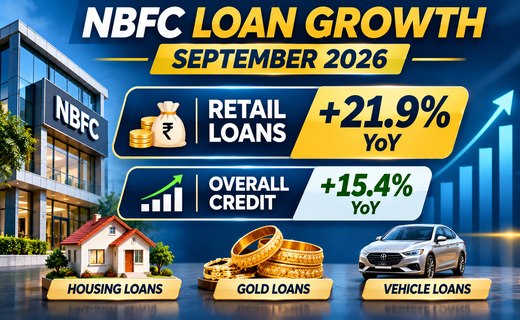
NBFC Loan Growth September 2026 reveals a sharp increase in consumer lending, with retail loans expanding 21.9% year-on-year compared with 16.8% in September 2025. The Reserve Bank of India released the figures on 6 November 2026, highlighting stronger demand across gold-backed, housing and vehicle loans.
Overall credit extended by non-banking financial companies (NBFCs), including housing finance companies, grew 15.4%, against 13.3% a year earlier.
The figures indicate faster expansion in consumer-facing lending, although they do not establish whether borrowing has become cheaper or easier for every applicant.
NBFC Loan Growth September 2026: Key Figures
According to the RBI’s official sectoral credit release, retail lending outpaced overall NBFC credit growth.
| Lending category | September 2026 YoY growth |
|---|---|
| Overall NBFC credit | 15.4% |
| Retail loans | 21.9% |
| Agriculture and allied activities | 17.8% |
| Services | 17.3% |
| Industry | 7.4% |
The figures are provisional and cover major NBFCs in the RBI’s Upper and Middle Layers, alongside housing finance companies.
The reporting sample represents approximately 87% of total credit under the RBI’s stated reference measure.
Gold Loans Lead the Retail Lending Expansion
Loans against gold jewellery emerged as one of the fastest-growing categories.
Outstanding NBFC gold loans increased 66.1% year-on-year to approximately ₹3.74 lakh crore in September 2026, compared with ₹2.25 lakh crore a year earlier.
Consumer durable financing also expanded 54.4%, while vehicle loans grew 16.1% and housing loans increased approximately 12.5%.
The figures show that different retail lending products are growing at considerably different rates.
Gold-backed borrowing can provide relatively quick access to funds because lenders hold jewellery as collateral. However, borrowers face the risk of losing pledged gold if they fail to repay according to the loan agreement.
Higher gold prices can also affect the amount borrowers are eligible to receive against their jewellery.
Why Are NBFCs Lending More?
NBFCs serve borrowers across housing, vehicles, consumer purchases and small-business financing.
Their lending activity reflects credit demand, funding availability, collateral values and lenders’ willingness to take risk.
The latest data suggests retail credit is playing a larger role in NBFC portfolio growth.
Outstanding retail loans reached approximately ₹26.84 lakh crore, accounting for around 43.5% of the total credit reported by the surveyed lenders.
However, growth in outstanding balances should not be confused with the number of new loans sanctioned. It can also reflect changes in average loan sizes and repayments.
Industrial Lending Slows Despite Retail Strength
Not every sector recorded faster credit growth.
Industrial lending expanded 7.4% year-on-year, down from 10.2% in September 2025.
Services-sector credit growth also moderated to 17.3% from 23% a year earlier.
Agriculture and allied activities recorded stronger growth of 17.8%, compared with 5.2% in the corresponding period.
The contrast suggests that lending momentum remains uneven across the economy, with retail borrowing expanding more quickly than credit to industry.
What Borrowers Should Check Before Taking an NBFC Loan
Faster lending growth does not guarantee lower interest rates or relaxed eligibility requirements.
Borrowers comparing NBFC loans should examine the total borrowing cost rather than focusing only on the advertised interest rate.
Important considerations include processing fees, annual percentage rate, repayment tenure, prepayment charges and penalties for missed instalments.
For gold loans, the loan-to-value ratio, interest calculation method and auction conditions are especially relevant.
Housing and vehicle borrowers should also compare offers from banks and other regulated lenders before deciding.
The Risk Behind the Growth Numbers
Rapid retail lending expansion can support household purchases and access to finance. It also makes credit quality increasingly important.
Future RBI data will help show whether this growth remains sustainable, particularly in gold-backed and unsecured consumer lending.
For borrowers, the central message is straightforward: a growing lending market may provide more options, but affordability and repayment capacity should determine the final decision.
Disclaimer: This article provides general financial information and is not a recommendation to borrow. Loan terms, interest rates and risks vary by lender and product.