SBI IFC Loan of $150 Million to Support Rural Women
SBI IFC Loan of $150 Million to Support Rural Women
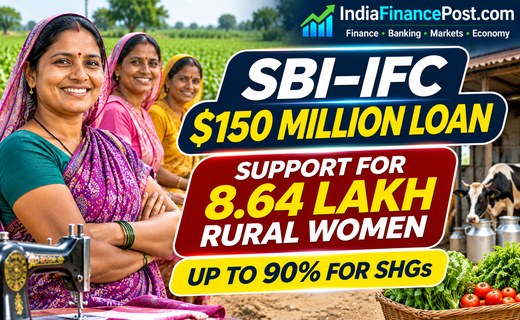
The SBI IFC Loan agreement will provide $150 million in financing to expand access to credit for approximately 8.64 lakh rural women across India. State Bank of India and the International Finance Corporation, a member of the World Bank Group, announced the partnership on November 6, 2026.
The funding targets women involved in agriculture and related activities, including crop cultivation, animal husbandry, fisheries and food processing. It is intended to support livelihoods and small enterprises rather than provide an automatic cash benefit to individual applicants.
The agreement also includes a separate currency-swap arrangement aimed at strengthening long-term rupee financing.
SBI IFC Loan: Key Details of the $150 Million Agreement
According to IFC’s official project disclosure, the financing comprises a senior unsecured social loan facility of up to $150 million to SBI through its GIFT City branch.
| Particular | Details |
|---|---|
| Financing institution | International Finance Corporation |
| Partner bank | State Bank of India |
| Social loan | Up to $150 million |
| Intended reach | Approximately 8.64 lakh rural women |
| SHG financing allocation | Up to 90% |
| Other beneficiaries | Eligible individual women micro-entrepreneurs |
| Main activities | Agriculture and allied businesses |
The amount represents funding provided to SBI for onward lending. It is not a direct government grant, and the announced beneficiary figure is a target rather than a count of loans already disbursed.
How Will Rural Women Benefit?
Up to 90% of the financing is intended to support women borrowing through Self-Help Groups (SHGs).
These groups help members access formal banking services, develop savings habits and obtain credit for income-generating activities.
The remaining financing will support women moving from group-based borrowing to individual micro-enterprise loans under SBI’s Svayam Siddha Scheme.
For example, an eligible borrower might seek financing to expand dairy operations, purchase equipment for food processing or invest in an agricultural business.
Actual loan availability will depend on SBI’s assessment, applicable scheme requirements and the proposed business activity.
What Is SBI’s Svayam Siddha Scheme?
SBI’s Svayam Siddha Scheme is designed to help eligible women from established Self-Help Groups become independent entrepreneurs.
The programme focuses on women associated with SHGs promoted under the National Rural Livelihoods Mission and linked with SBI.
Its purpose is to simplify access to individual business loans for women who have already participated in group-based financial activities.
However, membership of an SHG does not automatically guarantee loan approval. Applicants must meet the bank’s applicable conditions.
Women interested in the programme should contact an SBI branch or their SHG’s recognised coordinating agency for current eligibility and application requirements.
Why Is This Partnership Significant for Indian Banking?
The transaction marks IFC’s first credit line to an Indian public-sector bank and its first investment in a state-owned bank in the country.
It combines development financing with SBI’s extensive rural banking network.
Access to institutional credit can help women-owned businesses invest in equipment, working capital and productive activities.
The wider economic benefit will depend on whether financing reaches eligible borrowers, supports sustainable businesses and maintains responsible repayment standards.
IFC also plans to provide advisory support and training to strengthen financial literacy and micro-enterprise lending.
What Is the Currency-Swap Agreement?
Alongside the social loan, SBI and IFC executed their first cross-currency swap under a recently signed derivatives agreement.
SBI has become IFC’s first domestic swap counterparty in India and its first local swap counterparty in South Asia.
A currency swap can help an institution obtain rupee funding while managing exposure to exchange-rate movements.
This arrangement is separate from individual rural women’s loan applications. It supports IFC’s broader ability to finance Indian businesses in local currency.
What Should Potential Borrowers Check?
Women seeking loans should verify eligibility, interest rates, repayment periods, processing charges and any applicable guarantee fees.
They should also assess whether expected business income can support regular repayments.
Borrowers should use official SBI channels and avoid intermediaries promising guaranteed approval or demanding unauthorised payments.
The announcement does not establish a universal loan amount, fixed interest rate or automatic entitlement for every rural woman.
Conclusion
The $150 million SBI–IFC partnership could expand formal credit opportunities for approximately 8.64 lakh rural women, particularly through Self-Help Groups and micro-enterprise lending.
Its significance lies in combining international development finance with SBI’s rural banking reach.
The eventual impact will depend on implementation, borrower access and the long-term sustainability of financed businesses.
Disclaimer: This article is for general financial information only. Loan eligibility, approval, rates and charges depend on SBI’s applicable terms. Borrowers should verify details directly with the bank.